Strong design is useful, but trust is what makes content worth ranking and citing. Here is a practical way to strengthen experience, expertise, authority, and trust across your website.
"E-A-T (Expertise, Authoritativeness, Trustworthiness) isn't just a ranking factor, it's the gatekeeper to your traffic."
Updated October 2026 to reflect how trust signals matter across traditional search and AI-generated answers.
Most Websites Fail Before They Even Get a Chance
You’ve got seconds to prove you’re legit.
If your content reads like it was written by an AI with zero real-world experience, or your “About Us” page is a ghost town, visitors (and Google) will bail faster than a bad first date.
Your E-A-T isn’t just about what you say, it’s about who’s saying it, why they’re qualified and why anyone should believe them.
A Strong E-A-T Does One Thing Really Well
It makes Google (and your audience) think:
“This person knows their stuff.”
“Other experts respect them.”
“I can trust this information.”
If your site doesn’t scream those three things, you’re leaving rankings—and revenue—on the table.
Credibility also depends on whether the site is easy to crawl, render, and use. A regular Technical SEO audit helps catch the basics that can weaken trust before a reader ever evaluates the content.
How to Actually Improve E-E-A-T in 2026 (No Fluff)
1. Expertise: Prove You Know Your Stuff
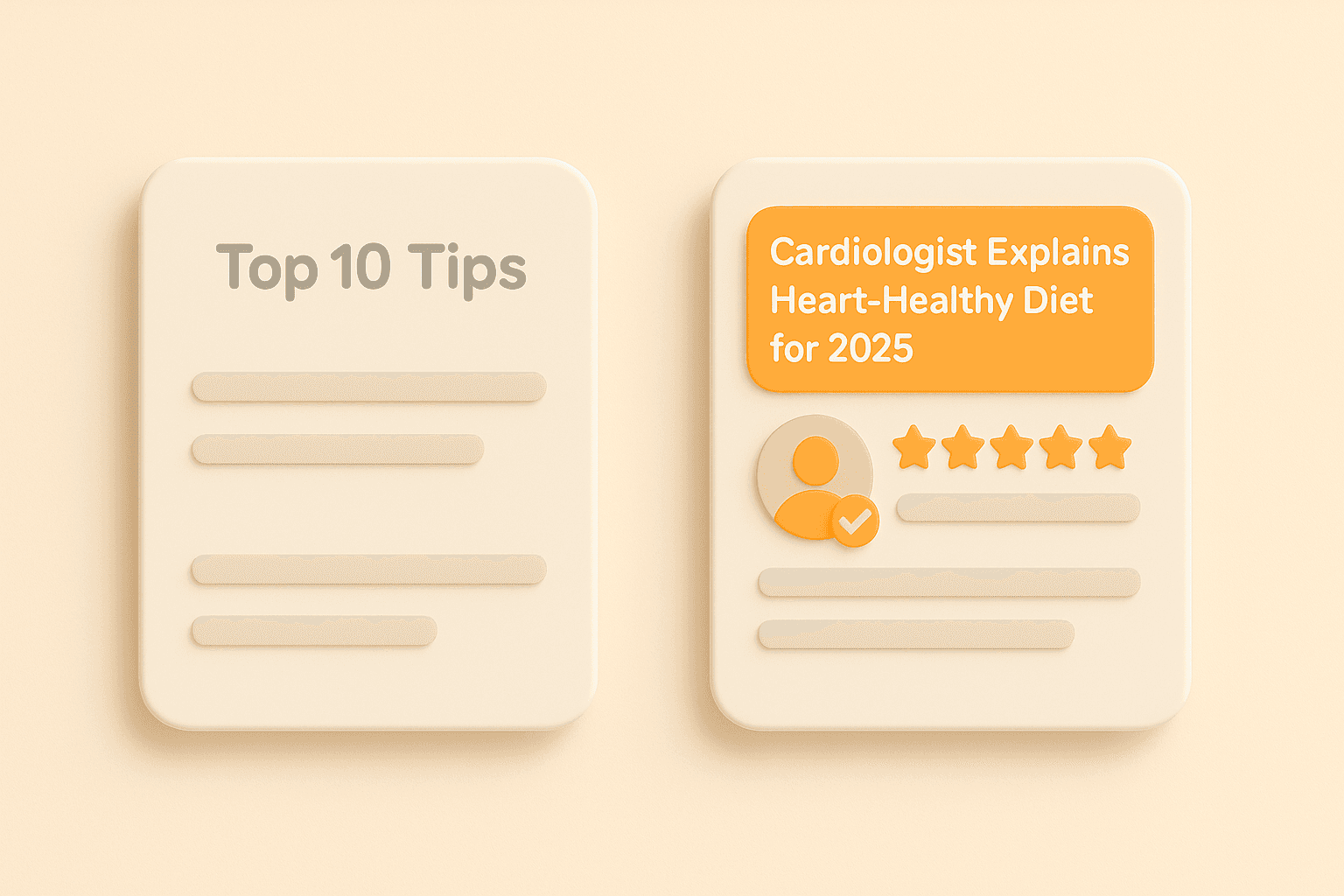
Weak: Vague, buzzword-filled content.
Strong: Deep, specific, “only an expert would know this” insights.
Actionable Fixes:
Show your credentials. If you’re a doctor, lawyer, or financial advisor, display your certifications.
Go deeper than surface-level advice. If everyone’s saying the same thing, dig into why it works (or doesn’t).
Use original data. Surveys, case studies, or even your own experiments make you stand out.
Example:
Weak: “Eating healthy is good for you.”
Strong: “Our 6-Month Study: Why 72% of Low-Carb Diets Fail (And How to Fix It)”
This is part of a broader shift in search. I wrote more about that in The Evolution of SEO, where credibility, usefulness, and technical clarity matter more than old checklist SEO.
2. Authoritativeness: Make Google See You as the Go-To Source
Weak: No backlinks, no mentions, no industry respect.
Strong: Cited by reputable sites, interviewed on podcasts, quoted in journals.
Actionable Fixes:
Get backlinks from trusted sources. (Forbes won’t link to a random blog but niche industry sites might.)
Guest post on authoritative sites (with a real byline, not a spammy backlink drop).
Speak at events (even virtual ones). Google indexes podcasts and webinars—being a guest boosts credibility.
Example:
Weak: “I’m a marketing expert.”
Strong: “Featured in HubSpot, Moz and Neil Patel’s podcast.”
3. Trustworthiness: Remove Every Red Flag
Weak: Sketchy affiliate links, no privacy policy, fake testimonials.
Strong: Transparent, secure, and human.
Actionable Fixes:
Fix your “About Us” page. Real photos, real bios, real contact information.
Add trust signals: SSL certificate, clear refund policy, verified reviews.
Avoid shady tactics. If your “free guide” requires 17 opt-ins, Google notices.
The same trust signals matter when content is summarized by AI systems. That connection is also covered in From SEO to GEO.
Example:
Weak: “Buy now! Limited stock!” (With no expiration date.)
Strong: “Here’s our 30-day refund policy—no questions asked.”
The Bottom Line
E-A-T isn’t a checkbox. It’s the difference between ranking on page one… or disappearing into the abyss.
In 2025, Google’s not just judging your content—it’s judging you.
So ask yourself:
Would an expert respect this?
Would a real person trust this?
Would Google bet its reputation on this?
If not, it’s time to level up.